
Sponsored Content

CO2 emissions dangerously impact the equilibrium of our home planet. When the problem becomes significant, everybody wants to help their children to have a brighter future.
A team of rocket scientists worked for decades with agencies, such as NASA, as well as space ventures and research laboratories, to handle the problem of CO2 emissions during a space launch. They came to a solution that looked like a sci-fi idea, but the physics worked and it’s always how innovation looks at first: crazy!
The team obtained an International Patent Classification and built a prototype demonstrating the technology.
An airplane traveling intercontinental distances without fossil energy is a quest. Nowadays, existing solutions, like hydrogen, don’t work at scale and will take decades to develop.
Space launch technology can be used to decarbonize air transport, which produces much more CO2 than space transportation.
It opens a new area of aviation. It’s not about reducing CO2 emission of an airplane from Paris to Sydney—it cuts them off and, ironically, it’s faster. The trip would take 2 hours instead of 21h.
We eliminate problems instead of trying to find their solutions by rethinking the fundamentals. An airplane carries its own chemical energy, fuel, and systems to convert the energy energy. Engines require a lot of mass to fly and, consequently, a lot of energy is consumed just to carry the energy.
We put these systems, engines, and fuel tanks out of the airplane and onto the ground. It opens news possibilities.
The airplane is accelerated at ground level in a circular catapult, gaining nearly all of the speed it needs to fly up to its delivery destination. Once the airplane is at full speed, it’s launched into the atmosphere.
The electric engine of the airplane is the catapult and a ground installation makes it easy to connect to the airplane’s electrical network. It’s simple, realistic, and fast to deploy.
The front picture shows the catapult. Depending on the travel distance, it ranges from 10 to 100 meters in diameter. The cargo airplane carries 20 kg to 10 tons.
Figure 1 is the subscale catapult, which is 3 meters in diameter and half a ton. It was used to design the next catapult, which is 10 meters in diameter.
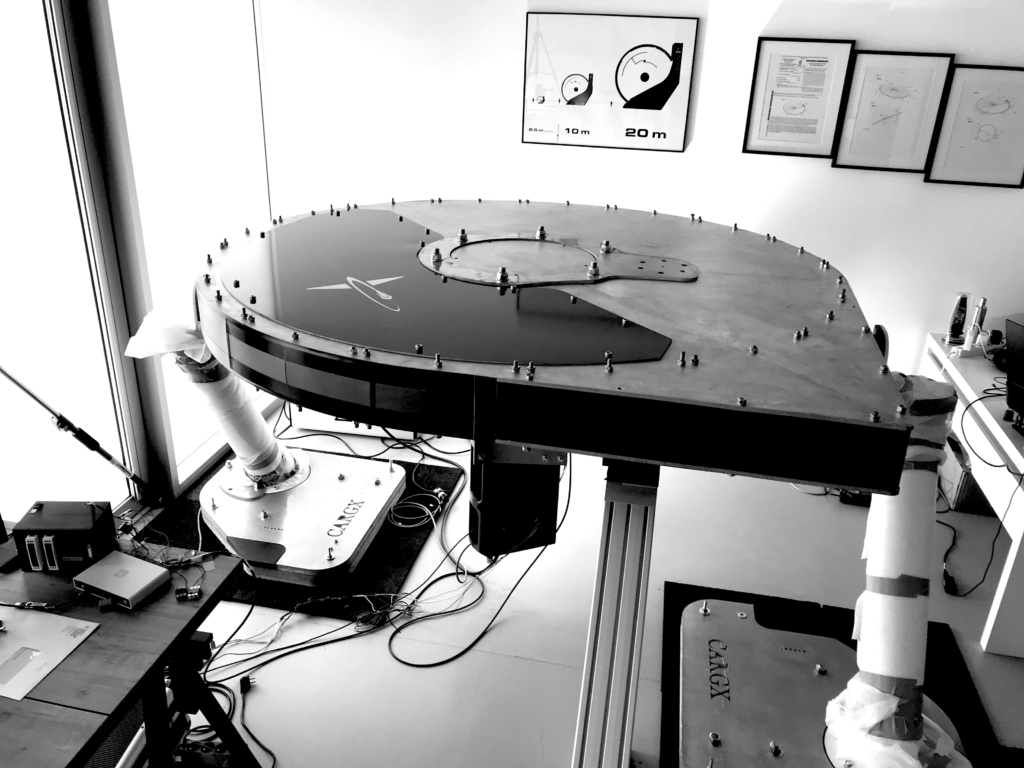
The first airplane carries 20 kg of payload. It’s an autonomous RC model. Figures 2, 3, and 4 depict a version in development.
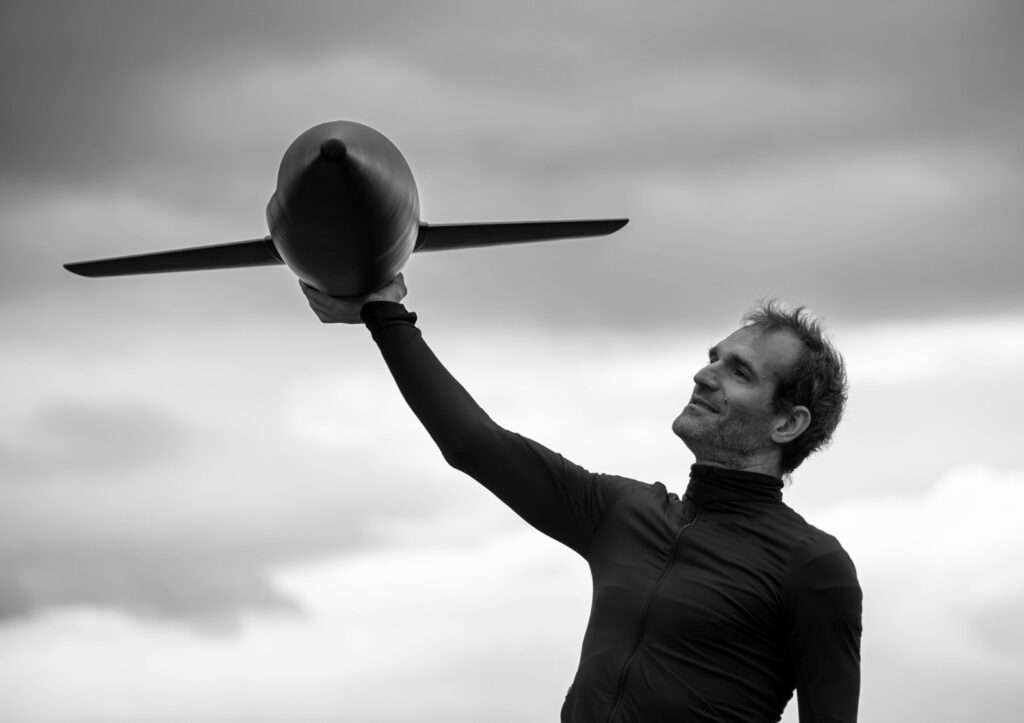
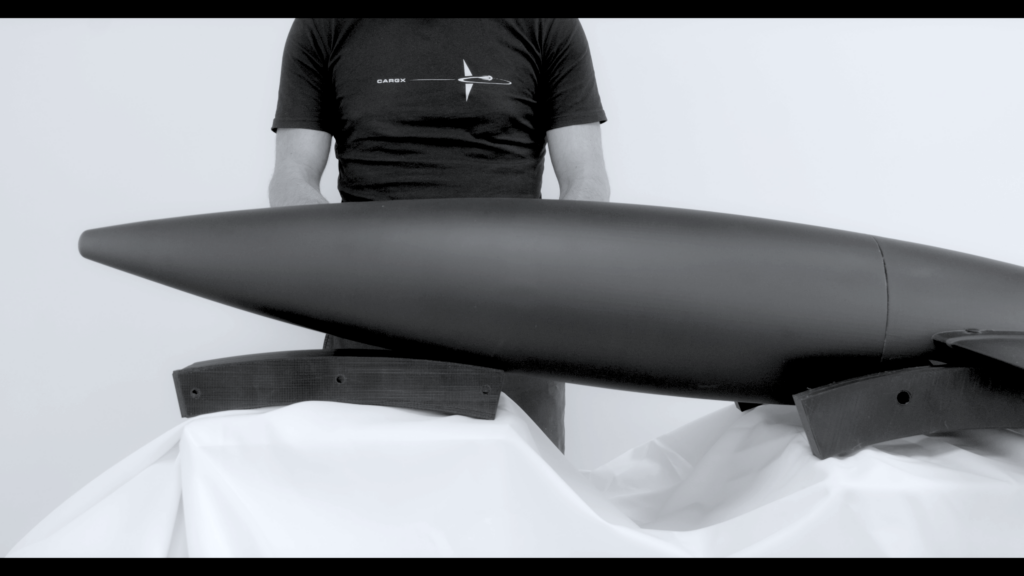
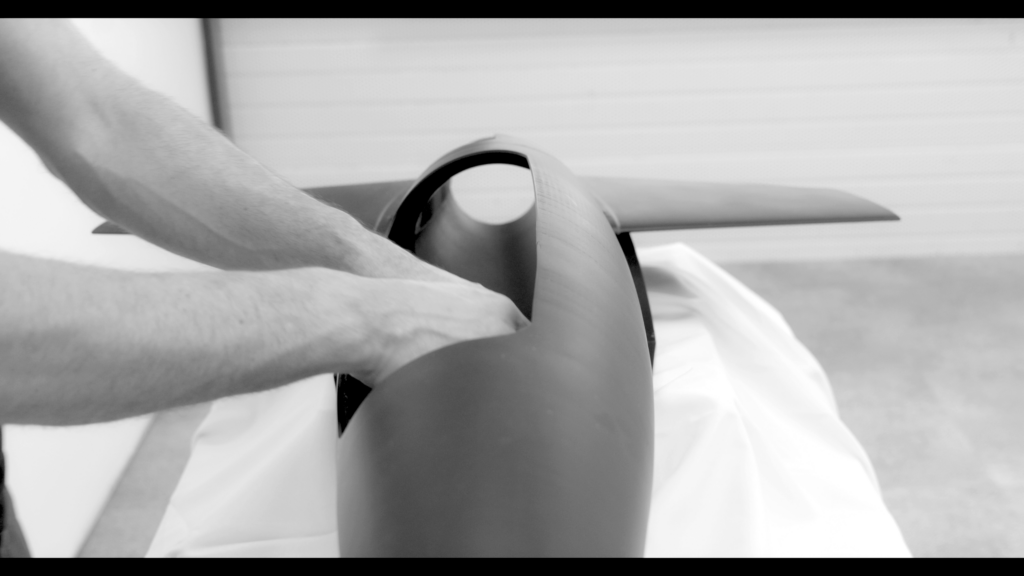
We share it with you because it’s not just our solution—it’s a solution to a problem we all face.
We are RC model enthusiasts. We have developed a full RC aircraft as an ambassador of this project. The images in Figures 2 through 4 are for research purposes on a supersonic version.
TOM, our RC ambassador aircraft will be disclosed very soon.
TOM is a subscale model of the engineering model that we will launch from a catapult that is 10 meters in diameter. If you want to discover more about this unique aircraft and about this first-in-history catapult technology, visit this page:
We promise a live demo of our catapult.
Be part of it. Spread this message in the community. It could all start with RC enthusiasts like you.
1) “CO2 emissions dangerously impact the equilibrium of our home planet.” No, CO2 emissions are the natural product of animal life and of combustion. Earth’s natural system of equilibrium dealing with changes in its environment has worked just fine for millions of years.
2) “….it’s a solution to a problem we all face. ” At most it is only a partial solution affecting just a part of our transportation sector, but only if it works.
3) Considering the acceleration forces needed to achieve the velocity of the projectile I wouldn’t want to be a passenger on this thing!
4) Was this supposed to be held until being published April 1?
Since your comment contains dangerous levels of common sense I’m sure it will be removed shortly.
I believe the roto launch system went bankrupt. There’s a problem with spinning fragile things like satellites up to 20-30 sideways forces and then letting them go. A straight forward railgun style approach would be much more practical however, the length needed for the hop would be massive, Rail guns generally burn their barrels out in 20 shots THOUGH a longer run would be done at less acceleration and energy dump BUT need to be elevated on one end so, perhaps on clear side of the mountain launches. Thirdly, the emissions from that large an electromagnetic dump is really ozone inducing.
So basically, it is a problem using massive amounts of chemicals to get something topside. It is a problem that current solutions need to be tried to find a new way. It ISN”T a CO2 problem. If it was, all of our lovely, more important people wouldn’t jet, yacht, take private fleets of automobiles around the globe to great big parties that last a bit over a week to discuss what to do with us “poors” while they’re lifestyles never change OR in fact, improve because of their status in this Boondoggle. If it was critical, they’d teleconference.
However, it is nice to see that former and future modelers are being used in part of a sciency process, if the background of it is Superfluous at least and down right Theft in actuality. I know several modelers who used innovative techniques throughout their careers to move up and place in the industry to make space travel more available. One that went from Wind Turbine blade design to that Stratolaunch program and now is working on defense system platforms. His wife, also in likewise technologies are hopefully going to make some pretty smart new additions to the industry of their own and I hope to see those flying model aircraft as well as he and his father did.
I remember years ago I read an article in one of the Mechanix Illustrated or Popular Mechanics magazines about a proposed circular launch system.
So I asked Chat the above question and got the following answer (took few questions to narrow search) :
You’re right—there were speculative articles in mid 20th century magazines like Mechanix Illustrated and Popular Mechanics that proposed circular or ring shaped launch systems for aircraft. These weren’t practical designs that ever reached production, but they did appear in the “futuristic concepts” sections of those magazines, alongside flying saucer aircraft and rocket assisted takeoff ideas.
Other comments from the search:
• Engineering practicality: Aircraft need a straight acceleration path to achieve lift. A circular track would impose lateral G-forces, stressing airframes and pilots unnecessarily.
• Speculative nature: Circular launch systems are more common in science-fiction or theoretical discussions (similar to space launch loops or centrifuge launch concepts).
• Magazine coverage: While Popular Mechanics and Mechanix Illustrated loved speculative designs, they focused on plausible near-future technologies. Circular catapults likely fell outside that scope.
And as Scott implied in the previous comment, and the Engineering practicality comment above mildly implies, to achieve speeds of any kind for ‘intercontinental distances’ per your thesis, centrifugal launch ‘g’ forces will destroy the launch vehicle before its even launches. I.E. think separation centrifuges and F-16 aircraft 9g turns!
Cool science project, but really? The intent sounds good. The science behind climate change is incontrovertible. If we don’t move away from carbon fuels, future generations will pay the price. But what kind of cargo, let alone airframe, can withstand the crazy g-loads required to make this work? The last successful test of SpinLaunch in 2022 had payloads subjected up to 10,000 g’s! Their current plan to launch satellites will use conventional chemical rockets, not their mass accelerator technology.
Scott, William, John, Greg and all,
If you leave a comment to the previous article, it means it makes you curious.
That’s a good point !
We really enjoy your interest, anyway if you are skeptical, positive, pessimist, optimist or critical about the How, the What, the Why.
We are here to share a passion about RC models, in the AMA tradition.
And to provide, a little, of context about the project we develop.
We don’t pretend to be neither right or wrong. And of course, we don’t pretend to be reasonable when it’s about trying to develop unusual new flying stuffs !
We intent to contribute bringing fresh air & enthusiasm !
And we prefer to fail while trying to do new things rather than doing nothing, or failing doing what is usually done !
You catch the deep rooted mindset ?
In case you want to know more, leave your email, we will contact you soon, when it’s the right time :
https://cargx-sustainable-transport.com/welcome-to-the-countdown/
Doing so, you will be invited to an online event. Depending on how you will decide to be part of this event, you will give us the chance to answer your questions.
And don’t worry if you don’t believe in CO2 emission issues of our home planet, or if you don’t believe in mass accelerator launches. Or if you think that mass accelerators involves high g’s loads and are not designed to launch eggs and chickens.
It’s totally fine for us.
We are really open to speak with people having different perspectives & we really enjoy trying to understand their point & opinion. It helps growing & maturing.
We are here to share fun, cool “flying stuff project”.
A member of the team in the posted article & AMA member
Best
Sólo vuelo aviones rc estoy deacuerdo qué agan lo Corecto
Dear “Team”:
Ooops! “We are here to share a passion about RC models, in the AMA tradition.” Actually, the real, authentic, and true AMA tradition is to share our passion about FF, CL, and RC models. Why do the FF and CL portions of the AMA tradition always get ignored? Just in case you are not aware: FF stands for Free-Flight, and CL stands for Control Line. Hopefully, you’ll be able to find someone at AMA HQ that can explain a bit further as to what these two terms mean. It is incredibly disappointing to me that I have to write this reminder. I would suggest that the number one priority of AMA should be sensitivity training. I don’t see a point to this constant alienation of two historic segments of the hobby.
I would like to think the AMA tradition as promoting aviation in all it’s forms, whether it’s FF, CL, RC, balloon, rocket, kite or maple seed. Anything aviation in model form, I suppose, with the added side benefit of a STE(A))M education of sorts for young and old alike. Certainly my aviation career as a mechanic and commercial pilot was piqued by the airplane models I built, even static plastic aircraft. Perhaps sensitivity training is required for those modelers who feel their interests are not getting enough print, but the reality is RC is the largest segment of the sport. I remember reading in the old modelers magazines when RC was getting more reliable and popular that, “we are free of our lines”, was a common theme. Hey, we all can enjoy the form of modeling we choose and encourage others, especially youth, to join and enjoy their form of model aviation, another AMA tradition. Happy Holidays and happy flying! Mark in Maine
This article is only a part of the reason I parted company with the “woke” AMA that ridiculously raised membership fees out of “affordable” for someone that only flew airplanes and an occasional helicopter (not self flying “drones”) that any idiot could “fly”.
All of the FAA regulations are directly related to the greed of people wanting to make the hobby “more accessible” (more profits for them) which has ruined it for everyone who learned to build and fly without computers.
The AMA should be about Model Planes period. I’ve never seen the need to lump model enthusiasts in with what really boils down to the weaponization of Radio Control for spying, surveillance and war fighting.